
An anonymised client case study by Darren Stamford
Cognitive Hypnotherapist | The Clerkenwell Group – City of London Hypnotherapy | Established 2005
━━━━━━━━━━━━━━━━━━━━━━━━━━━━━━━━━━━━━━━━
Hypnotherapy for Fear of Flying: Can a Learned Fear Response Change?
A fear of flying can affect far more than the flight itself. For some people, it can restrict holidays, family visits, work opportunities and the freedom to travel. This case study explores how Cognitive Hypnotherapy was used with one client who had experienced a long-standing fear of flying and wanted to feel calmer and more confident about air travel.
Fear responses are highly individual. One person may fear turbulence, another may feel trapped, while someone else may experience anxiety before they even reach the airport. Cognitive Hypnotherapy works with the client’s own experience, language and associations rather than assuming that everyone’s fear of flying is the same.
For people searching for hypnotherapy for fear of flying, the therapeutic focus is not simply on trying to suppress anxiety. It may also involve exploring the patterns and associations that maintain the fear and helping the person develop a different way of responding.
Client Case Study
Presenting Problem
Client C came to see me with a long-standing fear of flying. The fear had prevented her from travelling freely and was limiting opportunities to visit family, spend time with friends and experience new places.
The Therapeutic Approach
The first session focused on understanding her specific experience of flying and the language she naturally used to describe it. Rather than concentrating solely on the fear itself, we also explored what being able to fly more comfortably would allow her to do.
Her motivation became an important part of the work: visiting loved ones, exploring new places and enjoying the freedom that air travel could provide.
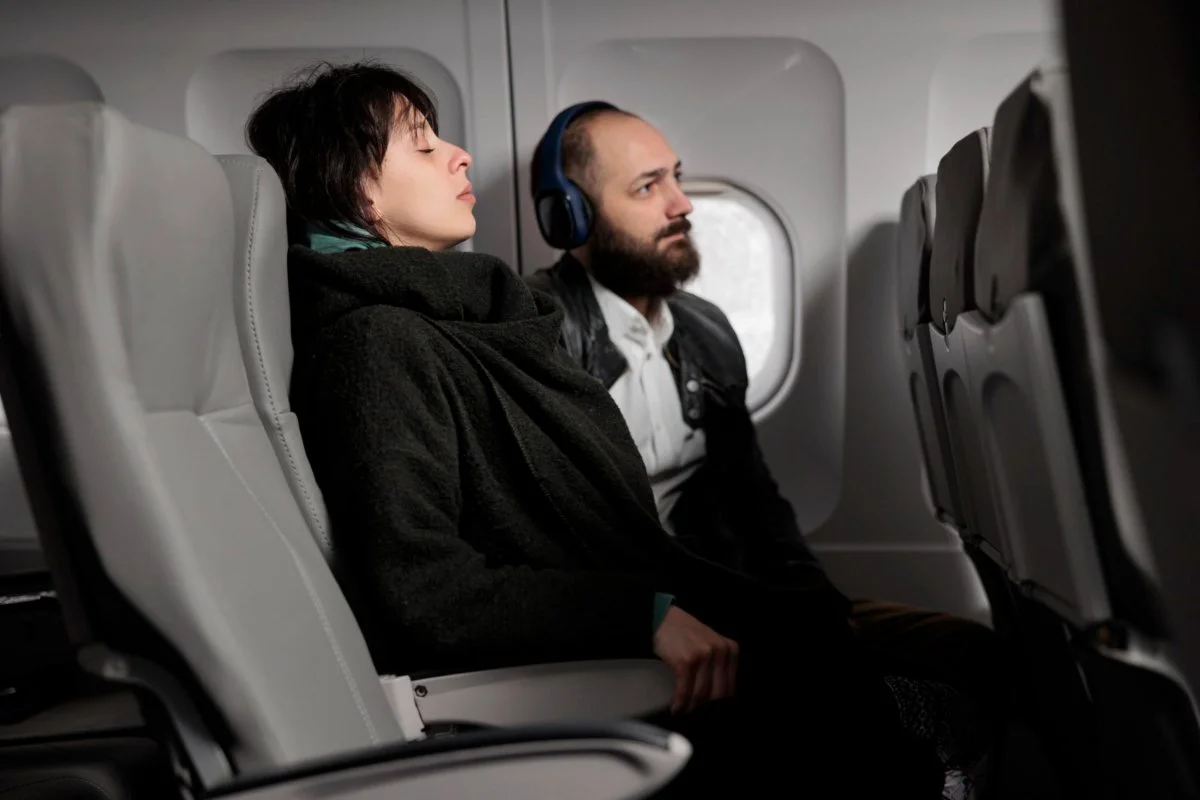
As part of this process, she began to notice that when she looked around an aircraft, many other passengers appeared relaxed, smiling and looking forward to their journey. This prompted her to question why her own experience had to remain so different and helped open up the possibility of a new perspective.
The second session used Cognitive Hypnotherapy tailored to her own way of processing experiences and to the feelings she wanted to associate with flying. Therapeutic suggestions and imagery were personalised around feeling calmer, more confident and more in control.
The third session focused on reinforcing and consolidating the therapeutic work so that these alternative responses could become increasingly familiar and natural.
The Outcome
Shortly afterwards, the client successfully completed a flight. She later sent me a photograph of herself and her husband smiling in a small biplane while on holiday in Africa – something she said she had never imagined herself doing before beginning therapy.
Approximately four weeks later, she sent an unexpected text message. Living in London, she had previously avoided travelling on the Underground because, without consciously recognising the connection, she associated being on the Tube with some of the same feelings she experienced on an aeroplane.
Although travelling on the Underground had never been mentioned as part of her original presenting problem, she reported that she was now travelling confidently on the Tube without the anxiety she had previously experienced.
For this client, the unexpected change suggested that the therapeutic work may have influenced a broader underlying pattern rather than only her response to aeroplanes.
What This Case Demonstrates
Cognitive Hypnotherapy for fear of flying is not based on a single script or a one-size-fits-all technique. In this case, the work focused on the client’s desired outcome, her own language and internal representations, and the personal meaning she attached to travel.
Sometimes a change in one learned response may be accompanied by changes in other situations that have become linked to a similar emotional pattern. A useful metaphor is a line of dominoes: changing one carefully chosen part of a pattern may sometimes have effects beyond the issue that originally brought someone to therapy.
Every client is different, and the experience described here should not be taken as evidence that the same outcome will occur for someone else.
Frequently Asked Questions
Can Cognitive Hypnotherapy help with fear of flying?
Some people choose Cognitive Hypnotherapy to explore a fear of flying. The work is tailored to the individual and may include the thoughts, feelings, associations and learned responses that contribute to their particular experience of flying.
Is hypnotherapy for fear of flying the same for everyone?
No. People can experience fear of flying for very different reasons. Cognitive Hypnotherapy works with the individual’s own model of the world, so the therapeutic approach is shaped around their particular experience, language, goals and responses.
What if my anxiety also occurs in other situations?
It can be useful to mention any other situations that produce similar feelings, such as trains, the Underground, lifts or enclosed spaces. Sometimes experiences that appear separate may share aspects of the same learned emotional pattern, although this will vary from person to person.
Looking for Help?
If a fear of flying is restricting where you travel, who you visit or the experiences you feel able to enjoy, Cognitive Hypnotherapy may offer a way to explore the patterns that contribute to that fear and work towards a different response.
If you would like to explore whether Cognitive Hypnotherapy for fear of flying could be appropriate for you, I would be happy to discuss your situation during an initial consultation.
Disclaimer
| This anonymised case study describes the experience of one individual client and is shared with permission. Identifying details have been removed or changed to protect confidentiality. The experience and outcome described are individual and should not be regarded as a guarantee that other clients will experience the same results. Cognitive Hypnotherapy is not a substitute for appropriate medical or mental health assessment, diagnosis or treatment. Anyone experiencing significant, persistent or worsening anxiety, panic or other mental health symptoms should seek appropriate advice from their GP or another suitably qualified healthcare professional. |